
Trying to Build Muscle or Lose Fat? Chicken Nutrition Facts 100g You Need to Know
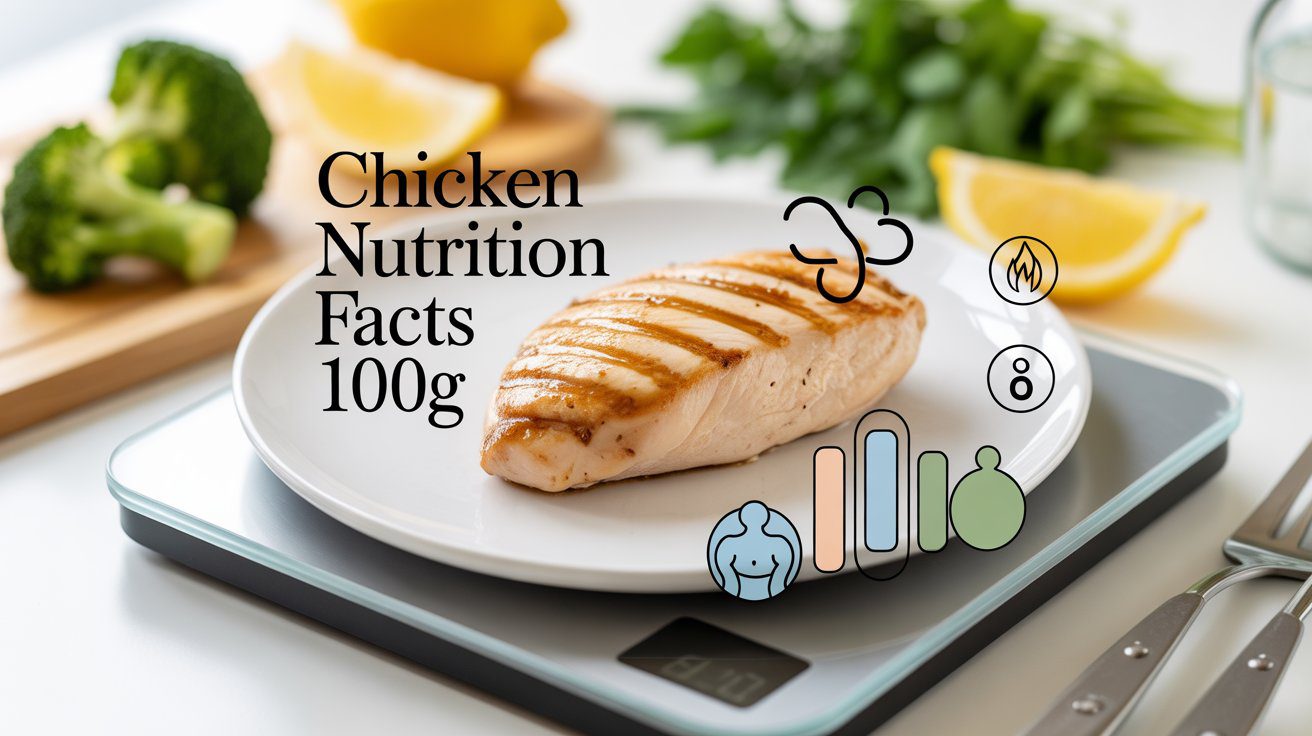
Table of Contents
If you’re trying to build muscle, lose weight, or simply eat healthier, chicken is probably already on your plate. It’s one of the most popular protein sources worldwide—and for good reason. But how nutritious is it really?
Understanding chicken nutrition facts 100g can help you make smarter decisions about portion sizes, calorie intake, and protein goals. Whether you’re meal-prepping or tracking macros, knowing what 100 grams of chicken provides is key.
Let’s break it down clearly and simply.
What Makes Chicken a Popular Protein Choice?
Chicken is considered a lean meat, especially when you choose skinless breast cuts. It is:
High in protein
Low in carbohydrates
Moderate to low in fat (depending on the cut)
Rich in essential vitamins and minerals
Its versatility and nutrient density make it a staple in fitness and balanced diets.

Chicken Nutrition Facts 100g (Cooked, Skinless Breast)
Here is the approximate nutritional value of 100 grams of cooked, skinless chicken breast:
Calories: 165 kcal
Protein: 31 grams
Fat: 3.5 grams
Carbohydrates: 0 grams
Cholesterol: 85 mg
Iron: 1 mg
Vitamin B6: Moderate amount
Niacin (B3): High
When people search for chicken nutrition facts 100g, they usually refer to this lean breast portion.
Protein in Chicken Per 100g
Protein is the main reason chicken is so popular.
With around 31 grams of protein per 100 grams, chicken provides a high-quality, complete protein source. This means it contains all essential amino acids your body needs for:
Muscle repair
Tissue growth
Hormone production
Immune support
For individuals trying to build muscle or maintain lean mass, chicken remains one of the most efficient protein options.
Calories in Chicken Per 100g
At approximately 165 calories per 100g (skinless breast), chicken is relatively low in calories compared to many red meats.
Because it contains zero carbohydrates, it fits well into:
Low-carb diets
Keto meal plans
High-protein meal plans
Weight loss programs
Calorie content may vary depending on cooking method.
Fat Content in Chicken
The fat content depends on the cut:
Skinless Chicken Breast (100g)
Around 3–4 grams of fat
Chicken Thigh (100g, cooked)
Around 8–10 grams of fat
Removing the skin significantly reduces fat and calorie intake.
Micronutrients in Chicken
Beyond protein, chicken provides essential micronutrients:
Vitamin B6
Supports metabolism and brain function.
Niacin (Vitamin B3)
Helps convert food into energy and supports skin health.
Phosphorus
Important for bone strength and cell repair.
Selenium
Acts as an antioxidant and supports immune health.
These nutrients add to the overall value of chicken nutrition facts 100g.
Chicken Breast vs Chicken Thigh: Nutritional Comparison
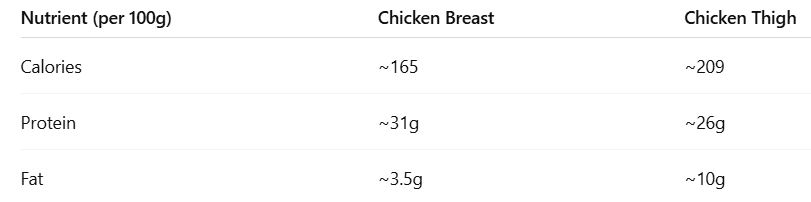
Chicken breast is leaner, while thighs contain more fat and flavor.
Is Chicken Good for Weight Loss?
Yes—when prepared properly.
Because chicken is high in protein, it increases satiety. This helps reduce overall calorie intake.
For weight management:
Choose grilled or baked chicken
Avoid deep frying
Remove skin
Pair with vegetables and whole grains
Balanced meals maximize benefits.
Is Chicken Good for Muscle Building?
Absolutely.
With around 31 grams of protein per serving, chicken supports muscle protein synthesis. Combined with resistance training, it helps build and maintain lean muscle mass.
That’s why athletes frequently include it in meal plans.
How Cooking Method Affects Nutrition
The nutritional value changes depending on preparation:
Grilled or Baked Chicken
Maintains high protein
Keeps fat low
Fried Chicken
Higher calories
Increased fat content
Boiled Chicken
Lower fat
Easy to digest
When analyzing chicken nutrition facts 100g, cooking method matters.
Is Chicken Safe to Eat Daily?
For most healthy individuals, moderate daily consumption is safe.
However:
Balance with other protein sources
Avoid heavily processed chicken products
Ensure proper cooking to prevent foodborne illness
Variety is important for overall nutrition.
How Much Protein Do You Need?
Daily protein needs vary based on activity level:
Sedentary adults: 0.8g per kg body weight
Active individuals: 1–1.6g per kg
Athletes: 1.6–2.2g per kg
Knowing the chicken nutrition facts 100g helps calculate portions effectively.
Common Myths About Chicken
❌ Myth: Chicken is unhealthy because of cholesterol
✔ Truth: Lean chicken in moderation fits into a balanced diet.
❌ Myth: More protein means faster muscle growth
✔ Truth: Total daily protein intake and training matter more.
Final Thoughts
Understanding chicken nutrition facts 100g gives you clarity on its role in a healthy diet. With approximately 31 grams of protein, moderate calories, and essential micronutrients, chicken remains one of the most efficient and accessible protein sources available.
When prepared properly and eaten in balance with other whole foods, chicken supports muscle growth, weight management, and overall health.
As always, moderation and variety create the most sustainable results.
Disclaimer
This article is for informational purposes only and does not replace professional dietary advice. Consult a healthcare provider or registered dietitian before making major changes to your diet.