

Ayurvedic Treatment of Gallstones: Natural Remedies, Diet & Lifestyle Support
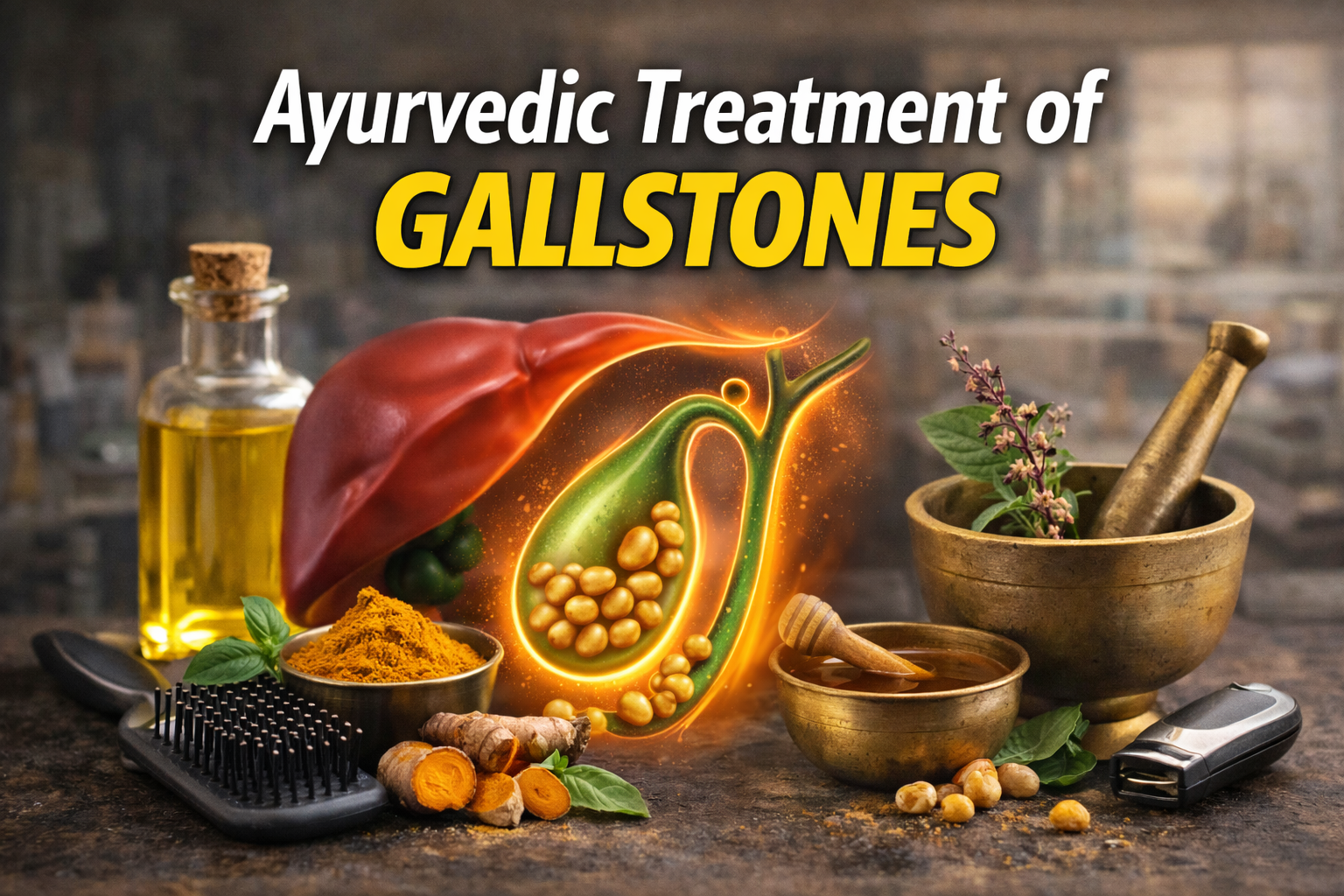
Gallstones are a common digestive problem today, often linked with poor eating habits, stress, and a sedentary lifestyle. Many people are advised surgery as the first option, which naturally leads them to ask whether a natural approach exists. This is where Ayurvedic treatment of gallstones becomes relevant.
Ayurveda looks at gallstones not just as physical stones, but as a result of long-term imbalance in digestion, metabolism, and doshas—especially Pitta and Kapha. Instead of focusing only on removing stones, Ayurveda works on correcting the root cause so the body can heal and prevent recurrence.
This guide explains gallstones from an Ayurvedic perspective, along with herbs, diet principles, lifestyle changes, and realistic expectations
What Are Gallstones?
Gallstones are hardened deposits that form in the gallbladder, a small organ located under the liver. The gallbladder stores bile, which helps digest fats. When bile becomes too concentrated or imbalanced, stones may form.
Common types of gallstones:
Cholesterol stones (most common)
Pigment stones (linked with excess bilirubin)
In Ayurveda, gallstones are associated with:
Weak digestive fire (Mandagni)
Excess heat and acidity (Pitta imbalance)
Thick, sluggish bile due to Kapha dominance
Accumulation of toxins (Ama)
Symptoms of Gallstones
Some people may have gallstones without any noticeable symptoms, while others experience frequent discomfort.
Common symptoms include:
Pain in the upper right abdomen
Nausea or vomiting, especially after oily food
Bloating, gas, and indigestion
Bitter taste in the mouth
Pain radiating to the back or right shoulder
Ayurvedic treatment of gallstones focuses on reducing symptoms while improving digestion and bile flow.
Ayurvedic Understanding of Gallstones
According to Ayurveda, gallstones develop due to long-term imbalance in the digestive system rather than a sudden issue.
Key causes from an Ayurvedic view:
Excess consumption of oily, spicy, fried foods
Irregular eating habits
Suppressed digestion and metabolism
Stress and emotional imbalance affecting gut health
Lack of physical activity
The goal of Ayurvedic treatment of gallstones is to:
Balance Pitta and Kapha doshas
Strengthen digestive fire (Agni)
Improve bile consistency and flow
Reduce inflammation naturally
Prevent new stone formation
Can Ayurveda Help in Gallstones?
Ayurveda may be helpful when:
Stones are small to medium in size
Symptoms are mild to moderate
There is no acute infection or blockage
The person follows diet and lifestyle changes consistently
Ayurveda works best as:
Early-stage management
Preventive care
Support alongside medical supervision
In severe cases with complications, modern medical treatment is essential.
Common Ayurvedic Herbs Used for Gallstones
1. Punarnava
Punarnava supports liver and gallbladder function and helps reduce inflammation and fluid imbalance.
2. Kalmegh
Known for its bitter taste, Kalmegh supports bile flow and improves digestion.
3. Bhumi Amla
This herb is traditionally used for liver detoxification and bile balance.
4. Kutki
Kutki is known in Ayurveda for supporting bile secretion and reducing Pitta imbalance.
5. Triphala
Triphala supports gentle detoxification, digestion, and gut health, which indirectly helps bile balance.
These herbs are often used in combination rather than individually.
Panchakarma & Detox Therapies
In some cases, Ayurvedic practitioners may recommend detox therapies to remove toxins and balance doshas.
Common supportive therapies:
Virechana (purgation therapy) for excess Pitta
Abhyanga (oil massage) to improve circulation
Herbal decoctions for digestion support
Such treatments should only be done under professional supervision.
Diet Guidelines in Ayurvedic Treatment of Gallstones
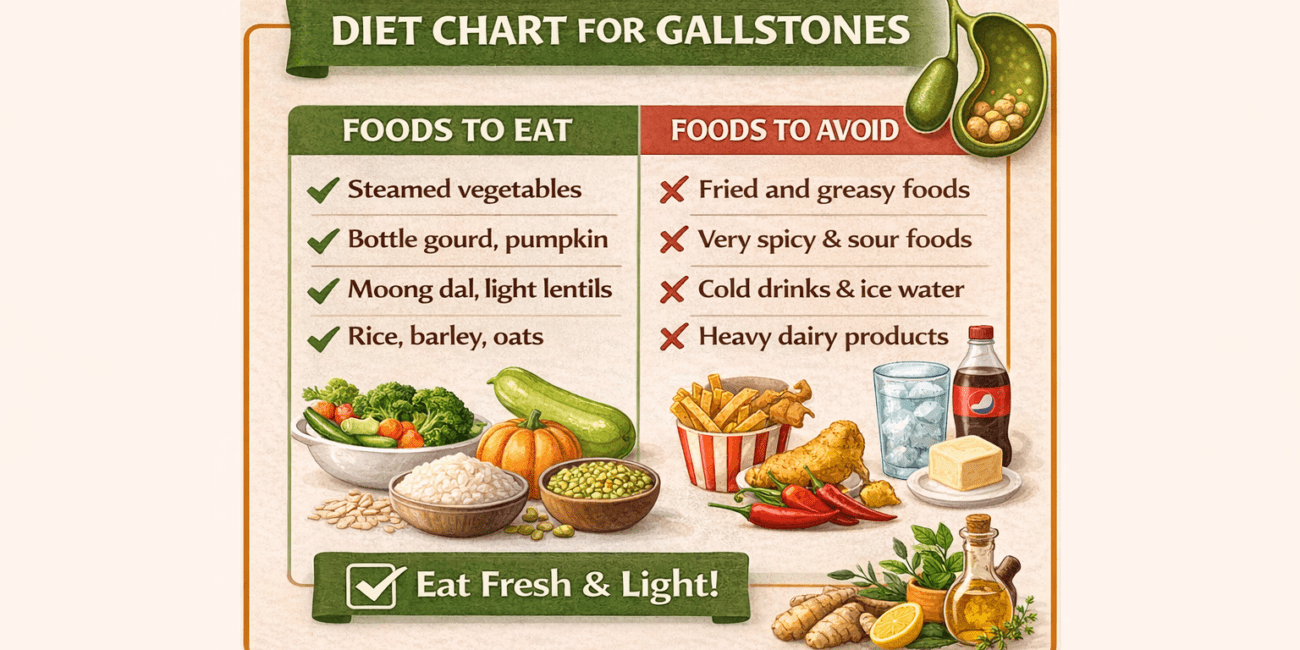
Diet plays a central role in managing gallstones naturally.
Foods that support gallbladder health:
Warm, freshly cooked meals
Steamed vegetables
Bottle gourd, ridge gourd, pumpkin
Moong dal and light lentils
Rice, barley, and oats
Warm water throughout the day
Foods to avoid:
Deep-fried foods
Excess oil and butter
Spicy and very sour items
Processed and packaged foods
Cold drinks and ice-cold water
Heavy dairy products
A Pitta-pacifying diet is often recommended in Ayurvedic treatment of gallstones.
Lifestyle Changes That Matter
Ayurveda emphasizes daily habits as much as medicine.
Helpful lifestyle practices:
Eat meals at regular times
Avoid overeating
Walk for 15–20 minutes after meals
Practice yoga and breathing exercises
Manage stress through meditation
Maintain a healthy sleep routine
Simple habits, when followed consistently, can reduce bile stagnation and digestive stress.
Yoga & Pranayama for Gallbladder Health
Certain yoga practices support digestion and liver-gallbladder function.
Commonly recommended practices:
Pawanmuktasana
Bhujangasana
Ardha Matsyendrasana
Anulom Vilom Pranayama
Deep belly breathing
Yoga should be practiced gently and regularly.
How Long Does Ayurvedic Treatment Take?
Ayurvedic treatment of gallstones is a gradual process.
Results depend on:
Size and number of stones
Individual digestion and metabolism
Diet discipline
Lifestyle consistency
Some people notice symptom relief within weeks, while structural changes take longer. Ayurveda focuses on long-term balance rather than instant results.
Myths About Ayurvedic Treatment of Gallstones
Myth: Ayurveda dissolves all stones instantly
Truth: Ayurveda works slowly and naturally by improving internal balance
Myth: Diet alone can cure gallstones
Truth: Diet is supportive but not the only factor
Myth: Natural treatment means no medical supervision
Truth: Responsible integration with medical advice is essential
When Surgery Becomes Necessary
Ayurveda does not deny the importance of modern medicine.
Surgery may be required if:
Stones cause repeated severe pain
Infection or blockage occurs
There is risk to liver or pancreas
Ayurvedic treatment of gallstones can still play a supportive role before or after surgery to improve digestion and recovery.
Expert & Traditional Perspective
From an experience and expertise standpoint:
Ayurveda has managed digestive and bile disorders for centuries
Traditional texts focus on Agni, Pitta balance, and detoxification
Modern understanding supports diet, lifestyle, and gut health as key factors
This blend of traditional wisdom and modern awareness strengthens trust in Ayurvedic principles.
Final Thoughts on Ayurvedic Treatment of Gallstones
Ayurvedic treatment of gallstones is not about quick fixes—it is about restoring balance in digestion, metabolism, and lifestyle. When followed correctly and under guidance, Ayurveda can help manage symptoms, improve gallbladder health, and reduce the chances of recurrence.
The key lies in:
Early awareness
Consistent diet discipline
Personalized herbal support
Healthy daily habits
Important Disclaimer
This article is for educational purposes only. Gallstones can be a serious medical condition. Always consult a qualified healthcare professional or Ayurvedic doctor before starting any treatment.