
Uric Acid Foods to Avoid: A Complete Guide for Healthy Joints and Kidneys
High uric acid is no longer a rare health issue. With modern diets, stress, and sedentary lifestyles, more people are experiencing joint pain, gout attacks, and kidney problems linked to elevated uric acid levels.
One of the most effective ways to control this condition is by understanding uric acid foods to avoid and making smarter dietary choices. What you eat every day directly affects how much uric acid your body produces and how well it gets eliminated.
This guide explains which foods increase uric acid, why they cause problems, and how avoiding them can protect your long-term health.
What Is Uric Acid and Why Does Diet Matter?
Uric acid is a waste product formed when the body breaks down purines—natural compounds found in many foods. Normally, uric acid dissolves in the blood and exits the body through urine.
Problems arise when:
The body produces excess uric acid, or
The kidneys fail to flush it out efficiently
This leads to hyperuricemia, which can cause gout, joint inflammation, and kidney stones.
Diet plays a major role because certain foods are very high in purines, directly increasing uric acid levels in the blood.
Why Avoiding Certain Foods Is Critical
Many people focus only on medication, but without dietary control, uric acid levels often remain unstable.
Avoiding high-risk foods helps:
Reduce gout flare-ups
Protect joints from crystal deposits
Lower kidney stone risk
Improve overall metabolic health
Understanding uric acid foods to avoid is the foundation of natural management.
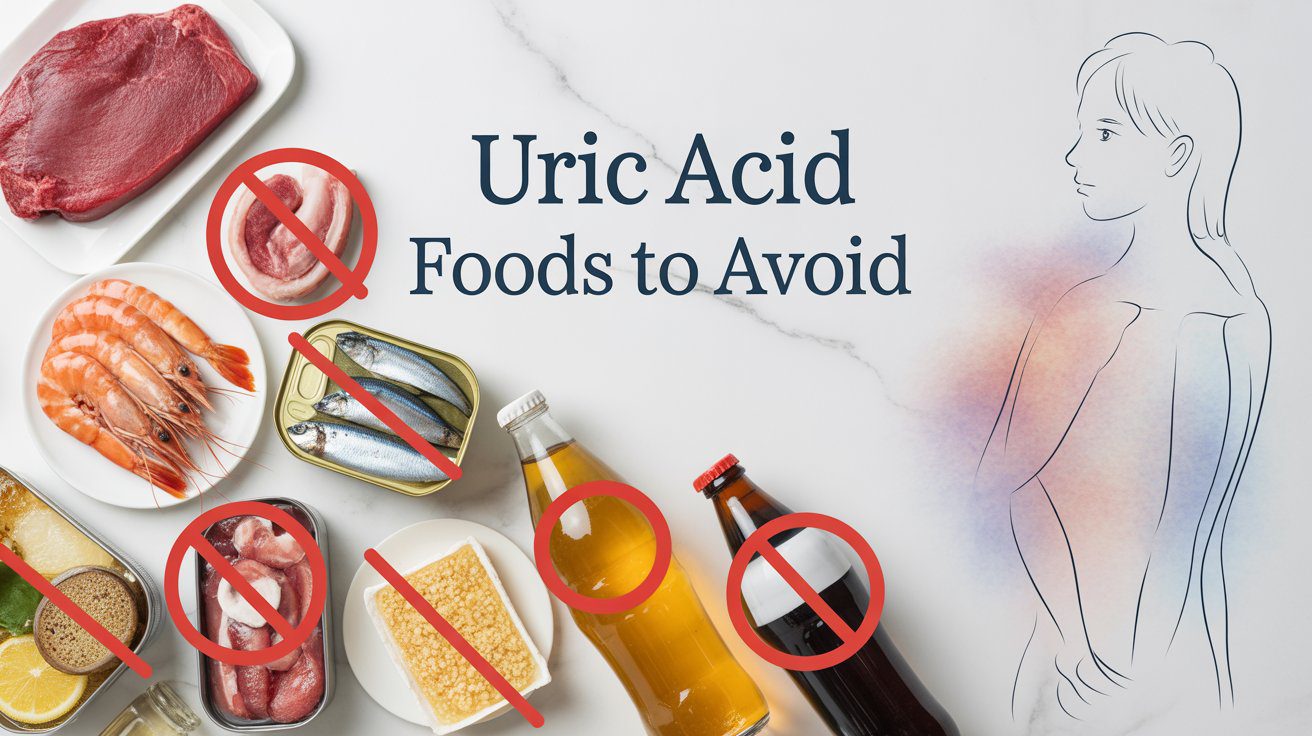
Uric Acid Foods to Avoid Completely
1. Red Meat
Red meats are among the biggest contributors to high uric acid levels.
Avoid or strictly limit:
Beef
Mutton
Pork
Lamb
These meats are rich in purines and slow digestion, which increases uric acid formation and joint inflammation.
2. Organ Meats (Worst for Uric Acid)
Organ meats are extremely high in purines and should be avoided entirely.
Examples include:
Liver
Kidney
Brain
Heart
Sweetbreads
Even small portions can trigger gout attacks in sensitive individuals.
3. Seafood High in Purines
Seafood is often considered healthy, but some varieties significantly raise uric acid.
Avoid or limit:
Sardines
Anchovies
Shellfish
Mussels
Prawns
Tuna
These foods increase uric acid production rapidly and may cause sudden joint pain.
Drinks That Increase Uric Acid Levels
4. Alcohol (Especially Beer)
Alcohol interferes with uric acid removal and increases crystal formation.
Beer is particularly harmful because it contains:
Alcohol
High purine content
Regular alcohol consumption is a leading cause of gout attacks.
5. Sugary Drinks and Fructose
Drinks sweetened with fructose raise uric acid levels more than solid foods.
Avoid:
Soft drinks
Packaged fruit juices
Energy drinks
Sweetened iced teas
Fructose directly stimulates uric acid production in the liver.
Processed and Packaged Foods to Avoid
6. Fast Food and Fried Items
Fast foods may not be high in purines, but they:
Increase inflammation
Promote weight gain
Reduce kidney efficiency
Examples:
Burgers
Fries
Fried snacks
Packaged bakery items
These foods indirectly worsen uric acid control.
7. Refined Carbohydrates
Highly refined foods cause insulin resistance, which reduces uric acid excretion.
Limit:
White bread
White rice
Pastries
Cookies
Cakes
Vegetables People Often Misunderstand
Some vegetables contain moderate purines but do not raise uric acid as aggressively as meat.
Vegetables to consume in moderation:
Spinach
Mushrooms
Cauliflower
Asparagus
These are generally safe when eaten in balanced portions.
Uric Acid Foods to Avoid During Gout Attacks
During flare-ups, dietary control becomes even more important.
Avoid completely:
All red meats
Seafood
Alcohol
Sugary drinks
High-fat foods
Stick to light, hydrating, and anti-inflammatory meals.
How Avoiding These Foods Helps Your Body
Reducing uric acid-raising foods allows:
Kidneys to flush excess uric acid
Reduced crystal deposition in joints
Lower inflammation
Fewer painful gout episodes
Dietary changes often show improvement within weeks when followed consistently.
Healthy Alternatives to Choose Instead
Instead of focusing only on restriction, replace problem foods with safer options.
Better choices include:
Fresh fruits (especially cherries, berries, apples)
Vegetables
Whole grains
Low-fat milk and yogurt
Nuts and seeds
Plenty of water
These foods support kidney function and reduce inflammation naturally.
Lifestyle Tips to Support a Low Uric Acid Diet
Diet works best when combined with healthy habits.
Drink 8–10 glasses of water daily
Maintain a healthy body weight
Exercise regularly but avoid overexertion
Manage stress and sleep well
Consistency is more important than perfection.
When Should You Be Extra Careful?
You should be especially cautious with uric acid foods to avoid if you:
Have a history of gout
Experience frequent joint pain
Have kidney issues
Have a family history of high uric acid
Early prevention reduces long-term complications.
Final Thoughts
Managing uric acid is not about extreme dieting—it’s about making informed food choices every day. Understanding which uric acid foods to avoid empowers you to protect your joints, kidneys, and overall quality of life.
Small changes, practiced consistently, can prevent painful flare-ups and improve long-term health. Your plate has the power to heal—or harm. Choose wisely.