
Lactose Intolerance Symptoms: Early Signs, Causes, and How to Manage Them Naturally

Table of Contents
Many people experience stomach discomfort after consuming milk or dairy products, but often ignore it as “normal digestion issues.” In reality, these could be lactose intolerance symptoms, a common digestive condition affecting millions worldwide. Understanding the signs early can help you avoid discomfort and improve your overall gut health.
In this detailed guide, we’ll explore the symptoms of lactose intolerance, why they occur, who is most at risk, and practical ways to manage the condition naturally—without giving up nutrition or quality of life.
What Is Lactose Intolerance?
Lactose intolerance is a digestive disorder where the body is unable to properly digest lactose, a natural sugar found in milk and dairy products. This happens due to a deficiency of lactase, the enzyme responsible for breaking lactose into simpler sugars for absorption.
When lactose isn’t digested properly, it moves into the colon, where gut bacteria ferment it—leading to gas, bloating, and other uncomfortable symptoms.
Common Lactose Intolerance Symptoms You Shouldn’t Ignore
The severity of symptoms varies from person to person, depending on how much lactose the body can tolerate. Symptoms usually appear 30 minutes to 2 hours after consuming dairy.
1. Abdominal Pain and Cramps
One of the most common lactose intolerance symptoms is stomach pain. Undigested lactose draws water into the intestines, causing pressure and cramping in the lower abdomen.
2. Bloating and Gas
Excess gas production occurs when lactose ferments in the colon. This can make your stomach feel tight, swollen, or uncomfortable—especially after milk-based meals.
3. Diarrhea After Dairy Consumption
Loose stools or frequent bowel movements are classic signs. The osmotic effect of undigested lactose increases water content in the intestines, leading to diarrhea.
4. Nausea and Sometimes Vomiting
Some individuals experience nausea shortly after consuming dairy. In more sensitive cases, vomiting may occur, especially in children.
5. Audible Stomach Sounds (Gurgling)
Excess gas and fluid movement in the gut can cause noticeable rumbling or gurgling sounds, which may feel embarrassing but are medically harmless.
Less Common but Important Symptoms
While digestive issues are the primary indicators, some people also report additional signs:
Fatigue after dairy-heavy meals
Headaches
Difficulty concentrating
General discomfort or uneasiness
These symptoms are less direct but may be linked to poor digestion and gut imbalance.
Why Do Lactose Intolerance Symptoms Occur?
The root cause is low lactase production, which may happen due to:
1. Genetic Factors
Many adults naturally produce less lactase as they age. This is especially common in people of Asian, African, and Middle Eastern descent.
2. Digestive System Disorders
Conditions like irritable bowel syndrome (IBS), celiac disease, or intestinal infections can damage the gut lining, reducing lactase production.
3. Age-Related Decline
Children often digest lactose easily, but enzyme levels can drop during adulthood, triggering symptoms later in life.
Lactose Intolerance vs Milk Allergy: Know the Difference
Many people confuse lactose intolerance symptoms with a milk allergy, but they are not the same.
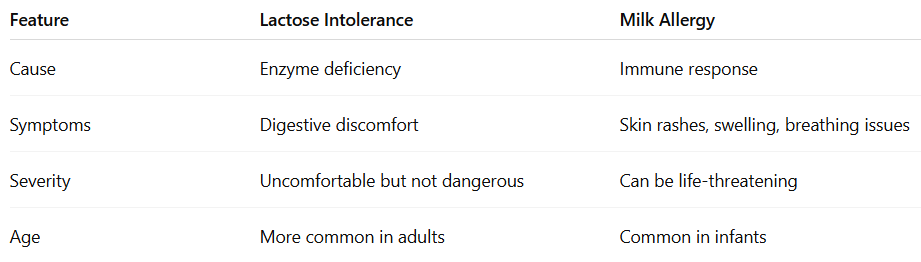
Understanding this distinction is essential for proper management.
How Is Lactose Intolerance Diagnosed?
If symptoms persist, doctors may recommend:
Hydrogen breath test
Lactose tolerance test
Elimination diet
Stool acidity test (for children)
However, many people identify the issue simply by tracking symptoms after dairy consumption.
Foods That Commonly Trigger Lactose Intolerance Symptoms
Certain dairy products contain higher lactose levels:
Milk (cow, buffalo, goat)
Ice cream
Soft cheese
Paneer
Condensed milk
Milk-based desserts
Even small quantities can trigger symptoms in sensitive individuals.
Foods That Are Usually Better Tolerated
Not all dairy needs to be eliminated. Some options are easier to digest:
Yogurt with live cultures
Hard cheeses (cheddar, parmesan)
Lactose-free milk
Plant-based alternatives (almond, soy, oat milk)
Natural Ways to Manage Lactose Intolerance Symptoms
Living with lactose intolerance doesn’t mean compromising nutrition. Here are effective strategies:
1. Practice Portion Control
Small amounts of dairy may be tolerated without triggering symptoms. Gradually test your limits.
2. Switch to Lactose-Free Alternatives
Many brands now offer lactose-free milk, curd, and butter with the same nutritional value.
3. Include Probiotics
Probiotics improve gut health and may help digest lactose more efficiently. Yogurt and fermented foods are excellent options.
4. Use Lactase Enzyme Supplements
These supplements help break down lactose when taken before dairy consumption.
5. Strengthen Gut Health Naturally
A healthy digestive system reduces symptom severity. Focus on fiber-rich foods, hydration, and stress management.
Can Lactose Intolerance Be Reversed?
In some cases, lactose intolerance caused by illness or gut damage may improve once the underlying condition is treated. However, genetic lactose intolerance is usually lifelong—but very manageable with diet adjustments.
When Should You See a Doctor?
Consult a healthcare professional if:
Symptoms are severe or worsening
You experience unexplained weight loss
Digestive issues persist even without dairy
There’s blood in stools or chronic pain
These may indicate other digestive disorders.
Final Thoughts
Lactose intolerance symptoms are common but often misunderstood. By recognizing early signs and making mindful dietary choices, you can enjoy a comfortable, healthy lifestyle without unnecessary restrictions. The key lies in understanding your body, listening to its signals, and choosing alternatives that support digestion and overall well-being.
With growing awareness and better food options, managing lactose intolerance today is easier than ever.