
6 Signs of Heart Attack a Month Before: Early Warnings You Should Never Ignore
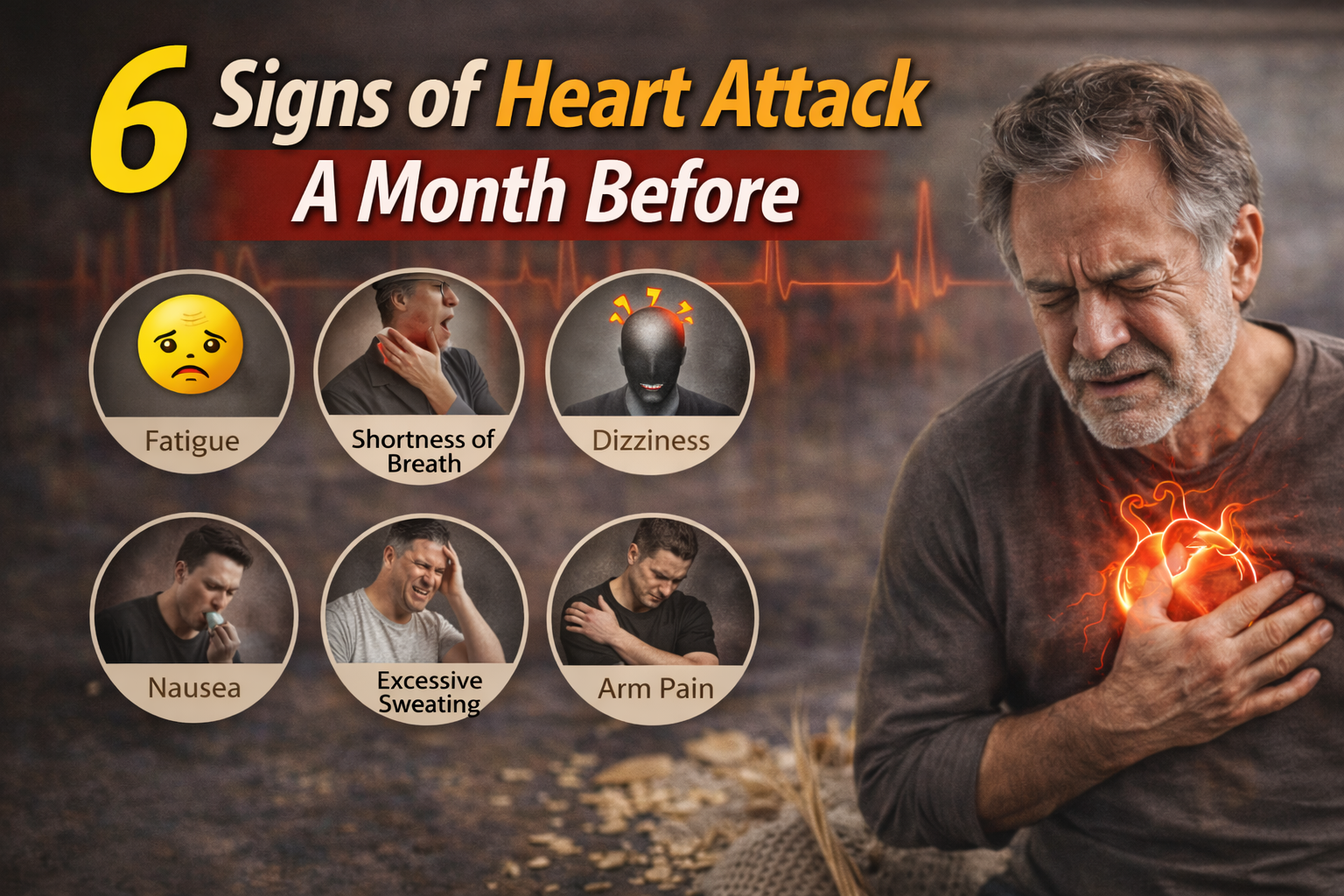
A heart attack is often imagined as a sudden, dramatic event. In reality, the body usually gives warning signs weeks before it happens. The problem is not the absence of signals—it’s that most people don’t recognize them in time.
Knowing the 6 signs of heart attack a month before can help you take action early, seek medical advice, and possibly prevent a life-threatening emergency. These signs are subtle, easy to ignore, and frequently mistaken for stress, aging, or digestion issues.
In this article, we’ll explore early symptoms, why they occur, who is most at risk, and what action you should take immediately. If you’re serious about heart health, read this till the end—and share it with your family.
Why Heart Attacks Rarely Happen Without Warning
A heart attack develops gradually when blood flow to the heart becomes restricted. This can happen due to:
Plaque buildup in arteries
Long-term inflammation
High blood pressure or cholesterol
Chronic stress
As the heart struggles to get enough oxygen, the body reacts. These reactions often appear as early symptoms, sometimes up to a month before a heart attack.
Understanding these signs gives you a chance to act before serious damage occurs.
Who Should Pay Extra Attention?
You should be especially alert if you:
Are over 40
Have diabetes, high BP, or cholesterol
Smoke or consume alcohol regularly
Live a high-stress lifestyle
Have a family history of heart disease
That said, heart attacks are increasingly seen in younger adults too—especially due to stress, poor sleep, and unhealthy diets.
1. Extreme or Unusual Fatigue
One of the earliest signs many people report is deep, persistent tiredness that feels different from normal fatigue.
How this fatigue feels:
Feeling drained even after a full night’s sleep
Getting exhausted from simple daily tasks
A constant sense of low energy without clear reason
This happens because the heart is working harder to pump blood, which puts strain on the entire body.
Many people—especially women—experience this symptom among the 6 signs of heart attack a month before, but dismiss it as stress or weakness.
2. Mild but Repeated Chest Discomfort
Not all heart-related chest issues feel sharp or severe.
Early chest sensations may include:
Tightness or pressure
Burning or heaviness
Discomfort that comes and goes
Because this pain is often mild and temporary, people ignore it. But repeated chest discomfort, even if not intense, should never be brushed aside.
3. Breathlessness Without Heavy Activity
If you notice you’re short of breath during simple activities, your heart may be struggling.
Warning signs include:
Feeling breathless while walking short distances
Difficulty breathing when lying flat
Needing frequent breaks while doing routine tasks
Reduced blood flow means less oxygen reaches the body, making breathing harder even without exertion.
This symptom is a major part of the 6 signs of heart attack a month before, especially when paired with fatigue.
4. Sudden Sleep Problems or Anxiety
Unexpected changes in sleep or mood can be heart-related.
Possible early signs:
Difficulty falling asleep
Waking up suddenly with restlessness
Unexplained anxiety or uneasiness
These changes can occur due to hormonal and nervous system responses when the heart is under stress.
If sleep disturbances appear suddenly and persist, they deserve attention.
5. Digestive Issues That Feel Unusual
The heart and digestive system share nerve connections, which is why heart trouble can feel like a stomach problem.
Early digestive symptoms may include:
Frequent indigestion
Nausea without clear cause
Bloating or discomfort after small meals
Many people treat these symptoms with antacids and move on. But new or recurring digestive discomfort, especially with other symptoms, may be heart-related.
6. Pain in the Jaw, Neck, Back, or Arm
Heart pain doesn’t always stay in the chest.
Referred pain may show up as:
Jaw or tooth-like pain
Neck stiffness
Upper back discomfort
Pain or heaviness in the left arm
Because this pain feels muscular or dental, people often ignore it. In reality, it is one of the most commonly missed 6 signs of heart attack a month before.
Why These Warning Signs Are Often Ignored
People overlook early heart attack symptoms because:
They expect sudden, severe pain
Symptoms come and go
Life feels too busy to pause
Fear of “overreacting”
Unfortunately, ignoring early signs can delay treatment when it matters most.
What You Should Do If You Notice These Signs
If you experience one or more of these symptoms repeatedly, don’t wait.
Take these steps:
Consult a doctor or cardiologist
Request heart-related tests if advised
Reduce physical and emotional stress
Avoid smoking and heavy meals
Early medical guidance can prevent a major heart event.
Simple Lifestyle Changes That Help Immediately
Even before diagnosis, these habits support heart health:
Walk daily, even lightly
Reduce salt and processed foods
Eat heart-friendly foods (oats, fruits, nuts)
Manage stress through breathing or meditation
Improve sleep quality
Small changes now can make a big difference later.
Awareness Is Not Fear—It’s Protection
Learning about the 6 signs of heart attack a month before is not about panic. It’s about being informed and prepared.
Many heart attack survivors say:
“The signs were there—I just didn’t take them seriously.”
Listening to your body early gives you a chance to protect your health and your family.
When to Seek Emergency Help Immediately
Call emergency services if you experience:
Severe chest pain
Sudden breathlessness
Collapse or fainting
Pain spreading to arm, jaw, or back
Never try to wait it out.
Final Words: Your Body Warns Before It Breaks
Your heart works nonstop for you.
When it starts to struggle, it speaks quietly first.
Recognizing the 6 signs of heart attack a month before can help you act early, seek help, and potentially save a life—maybe even your own.
If this information helped you, please share it with someone you care about.
Awareness spreads faster than risk—and it saves lives.
Important Disclaimer
This article is for educational purposes only and does not replace professional medical advice. Always consult a qualified healthcare provider for diagnosis or treatment.