Oats Nutrition Facts 100g: Calories, Protein, Fiber & Health Benefits Explained

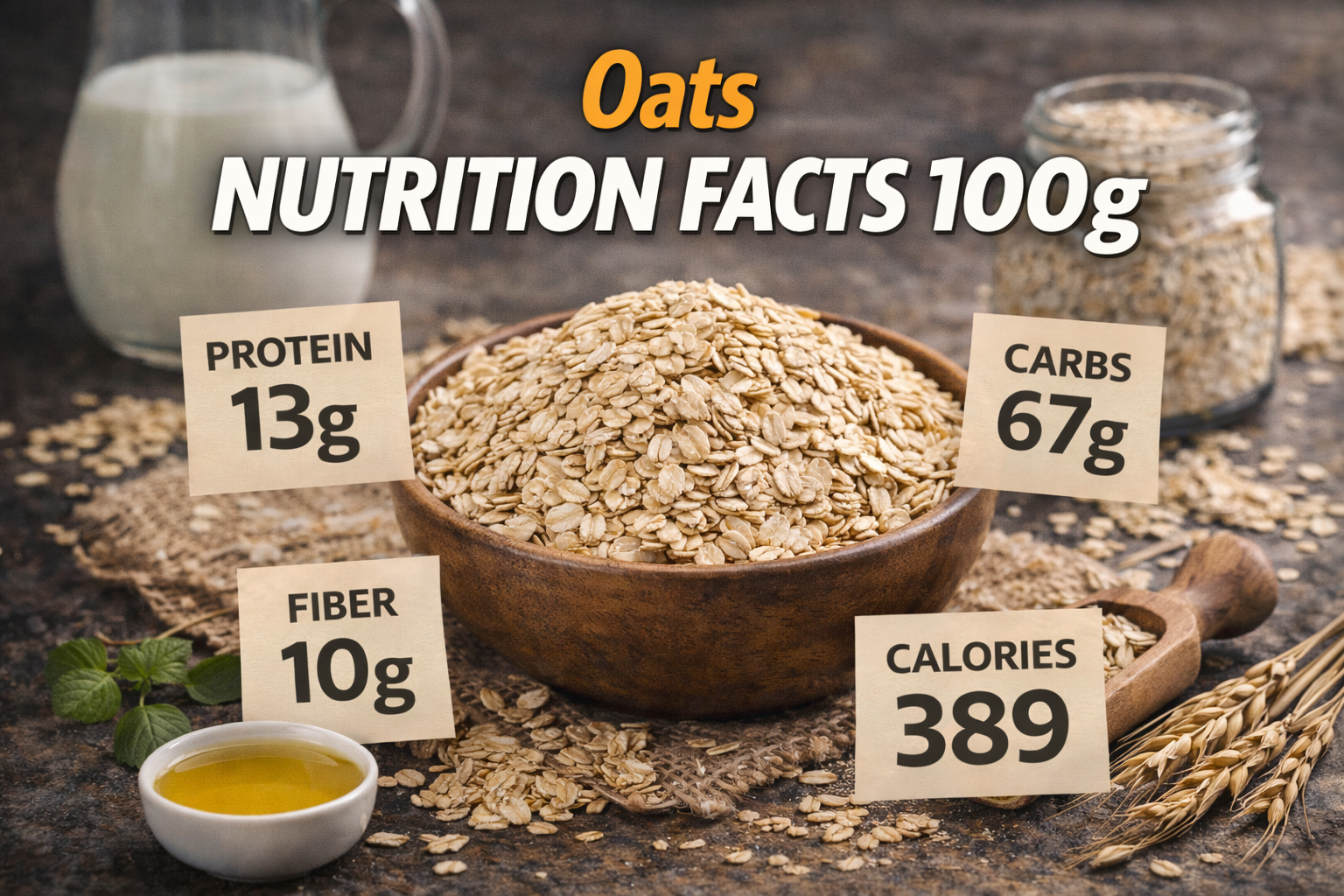
oats nutrition facts 100g

Oats are one of the most popular and trusted whole grains across the world—and for good reason. Whether you’re trying to lose weight, manage blood sugar, improve digestion, or build muscle, oats fit effortlessly into almost every diet plan. To use them correctly, it’s important to understand oats nutrition facts 100g, because portion size and preparation make a big difference.

In this detailed guide, we’ll break down the nutritional value of oats per 100 grams, health benefits, protein and fiber content, weight-loss suitability, best ways to eat oats, and who should be cautious


What Are Oats?

Oats are whole grains obtained from the oat plant (Avena sativa). They are minimally processed compared to many refined grains, which helps them retain fiber, vitamins, and minerals.

Common types of oats include:

  • Rolled oats

  • Steel-cut oats

  • Instant oats

  • Oat flour

Despite slight differences in texture and cooking time, their nutritional value remains largely similar.

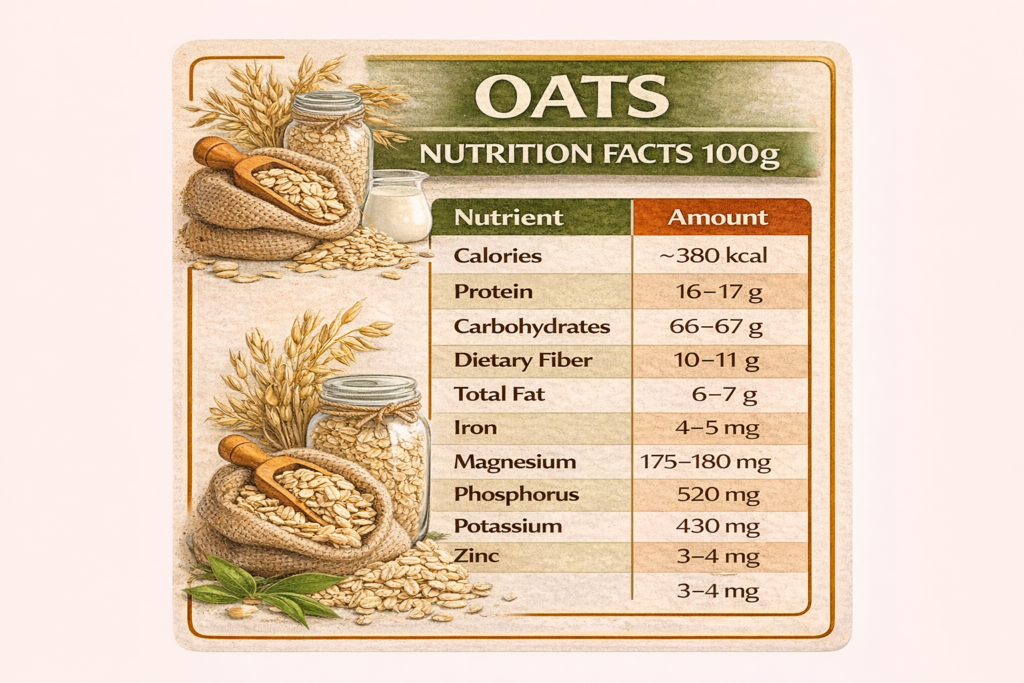
Oats Nutrition Facts 100g (Raw Oats – Approximate)

Understanding oats nutrition facts 100g helps you plan meals accurately, especially for calorie control and macronutrient balance.
These values may vary slightly depending on the variety and processing method.

oats nutrition facts 100g

Why Oats Are Considered a Nutritional Powerhouse

Oats are not just a source of carbohydrates—they offer balanced nutrition.

What makes oats special:

  • High fiber, especially beta-glucan

  • Moderate plant-based protein

  • Low glycemic impact

  • Rich in minerals and antioxidants

This combination makes oats suitable for long-term health rather than short-term dieting.

Protein Content in Oats (Per 100g)

Many people are surprised to learn that oats contain more protein than most grains.

Why oat protein matters:

  • Supports muscle repair

  • Helps control appetite

  • Improves satiety

Although oats are not a complete protein like eggs or dairy, they are an excellent supporting protein source, especially for vegetarians.

Fiber in Oats and Digestive Health

A major highlight of oats nutrition facts 100g is their fiber content.

Types of fiber in oats:

  • Beta-glucan (soluble fiber)

  • Insoluble fiber

Health benefits of oat fiber:

  • Improves digestion

  • Supports gut health

  • Helps lower cholesterol

  • Slows sugar absorption

Beta-glucan is one of the most researched fibers for heart and metabolic health.

Oats Nutrition Facts 100g for Weight Loss

Oats are widely used in weight-loss diets—but portion control is key.

How oats help with weight management:

  • High fiber keeps you full longer

  • Slow digestion reduces cravings

  • Stable energy prevents binge eating

Ideal portion for weight loss:

  • 30–50 g dry oats per meal

Eating the full 100g daily may exceed calorie needs for some people.

Are Oats Good for Blood Sugar Control?

Yes—when eaten correctly.

Oats have a low to moderate glycemic index, especially when:

  • Cooked with water or milk

  • Paired with protein or healthy fats

  • Eaten whole rather than instant oats

This makes oats suitable for people managing blood sugar levels.

Heart Health Benefits of Oats

Oats are well known for supporting cardiovascular health.

How oats help the heart:

  • Beta-glucan reduces LDL cholesterol

  • Antioxidants protect blood vessels

  • Magnesium supports blood pressure regulation

Regular intake may reduce long-term heart disease risk.

Oats for Muscle Building & Fitness

From a fitness perspective, oats are an excellent energy food.

Why athletes use oats:

  • Complex carbs for sustained energy

  • Protein for muscle recovery

  • Minerals for muscle function

They work best as:

  • Pre-workout meals

  • Breakfast for active individuals

Pair oats with milk, yogurt, nuts, or seeds for better muscle support.

Raw Oats vs Cooked Oats: Nutrition Difference

Raw oats:

  • Higher calorie density

  • Harder to digest

  • Not commonly eaten directly

Cooked oats:

  • Easier digestion

  • Better nutrient absorption

  • Lower volume calories per serving

Cooking does not destroy fiber—it improves digestibility.

Best Ways to Eat Oats

To make the most of oats nutrition facts 100g, preparation matters.

Healthy ways to include oats:

  • Oatmeal with fruits and nuts

  • Overnight oats soaked in milk

  • Savory oats with vegetables

  • Oats smoothie bowls

  • Oats flour in baking

Avoid excess sugar, flavored packets, and heavy toppings.

Who Should Be Careful with Oats?

Although oats are generally safe, some people should be mindful.

Use moderation if you:

  • Have gluten sensitivity (choose certified gluten-free oats)

  • Experience bloating (start with small portions)

  • Are on a very low-carb diet

Soaking oats can improve digestion for sensitive stomachs.

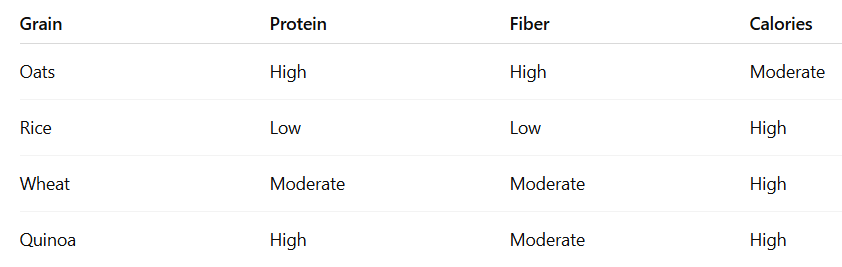
Oats vs Other Grains (Per 100g Comparison)

oats nutrition facts 100g

Traditional & Modern Nutrition Perspective

From experience and expertise:

  • Oats have been consumed for centuries

  • Recommended by dietitians worldwide

  • Supported by research on cholesterol and gut health

This blend of tradition and science makes oats a trusted food choice.

Common Myths About Oats

Myth: Oats cause weight gain
Truth: Excess calories cause weight gain, not oats

Myth: Oats are only for breakfast
Truth: They can be eaten anytime

Myth: Instant oats are unhealthy
Truth: Plain instant oats are fine—flavored ones are the issue

How Much Oats Should You Eat Daily?

For most adults:

  • 30–60 g per day is ideal

Athletes or highly active individuals may tolerate more.

The 100g nutrition value is for understanding composition—not daily intake guidance.

Final Thoughts on Oats Nutrition Facts 100g

Oats are one of the most practical, affordable, and nutrient-dense foods you can include in your diet. They support digestion, heart health, energy levels, and long-term wellness when eaten in the right portions.

Understanding oats nutrition facts 100g helps you use oats wisely—not excessively.

Key Takeaway

Oats are not a miracle food, but they are one of the most reliable whole grains for everyday health. Consistency, portion control, and smart combinations make all the difference.

Leave a Reply

Your email address will not be published. Required fields are marked *