Pumpkin Seeds Nutrition Facts 100g: Calories, Protein, Benefits & How to Eat

pumpkin seeds nutrition facts 100g

Pumpkin seeds may be small in size, but nutritionally, they are one of the most powerful seeds you can add to your daily diet. Known as pepitas in many parts of the world, these seeds are packed with protein, healthy fats, minerals, and antioxidants. Whether your goal is better immunity, muscle growth, heart health, or weight management, understanding pumpkin seeds nutrition facts 100g can help you use them correctly and safely.

In this detailed guide, we’ll break down their nutritional value, health benefits, calories, protein content, best ways to eat them, and who should be cautious


What Are Pumpkin Seeds?

Pumpkin seeds are flat, oval-shaped edible seeds obtained from pumpkins. They can be eaten raw, roasted, or soaked and are widely used in traditional diets, modern fitness nutrition, and plant-based eating.

They are especially valued because they provide:

  • High-quality plant protein

  • Healthy fats

  • Essential minerals like magnesium and zinc

  • Powerful antioxidants

This combination makes them a nutrient-dense food rather than an empty-calorie snack.

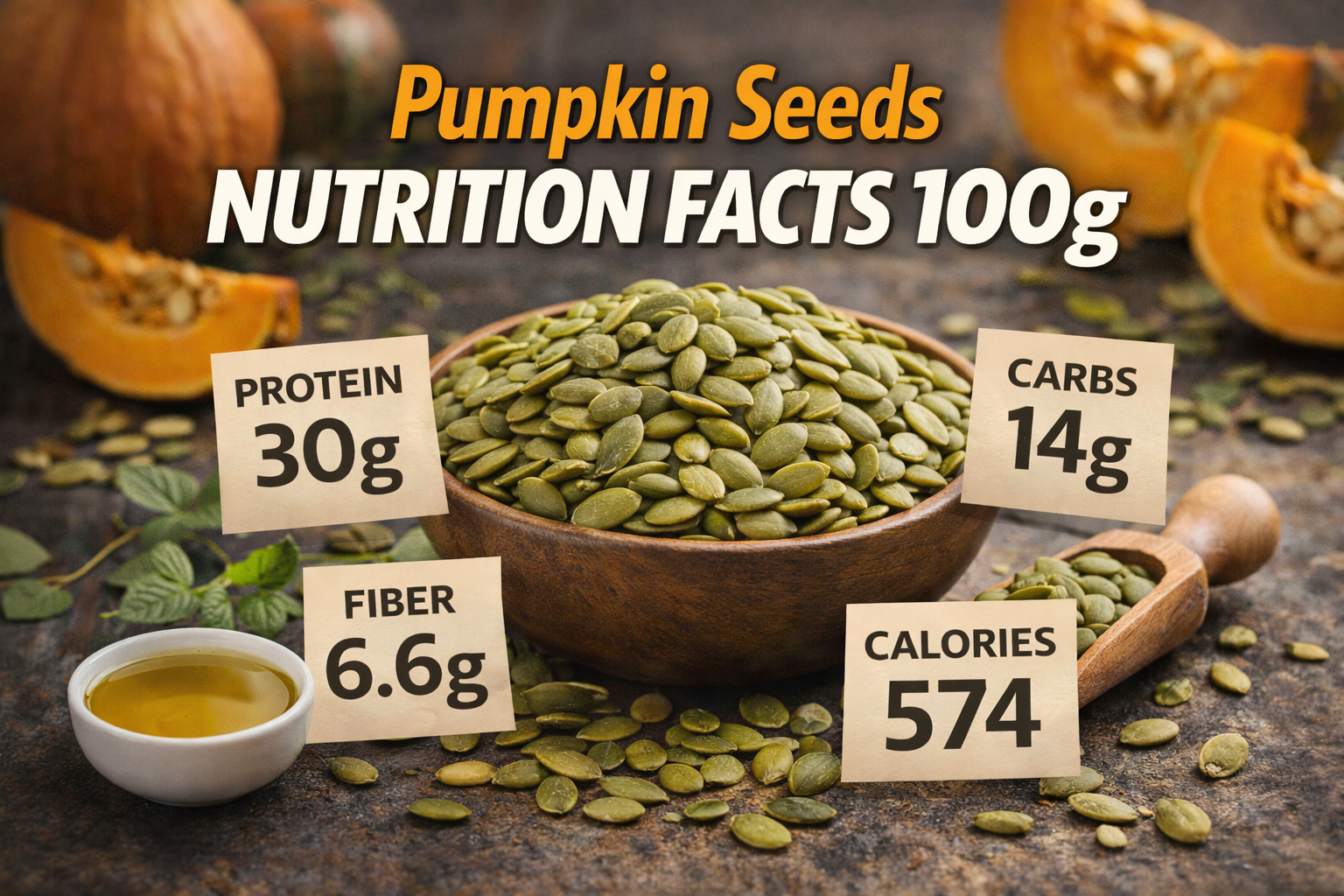
Pumpkin Seeds Nutrition Facts 100g (Approximate)

Understanding pumpkin seeds nutrition facts 100g starts with knowing exactly what they contain.

These values may vary slightly based on variety and preparation method, but overall, pumpkin seeds are one of the most mineral-rich seeds available.

pumpkin seeds nutrition facts 100g

Why Pumpkin Seeds Are Considered a Superfood

Pumpkin seeds stand out because they offer balanced nutrition—not just one or two nutrients, but a wide range that supports multiple body systems.

What makes them special:

  • Complete plant protein profile

  • Rich in unsaturated fats

  • High magnesium content (rare in modern diets)

  • Natural source of antioxidants

This is why pumpkin seeds nutrition facts 100g are often highlighted by nutritionists and fitness experts.

Health Benefits of Pumpkin Seeds

1. Excellent Source of Plant Protein

Pumpkin seeds are one of the best protein-rich seeds for vegetarians and vegans. Protein helps with:

  • Muscle repair

  • Tissue growth

  • Enzyme and hormone production

This makes them especially useful for gym-goers and active individuals.

2. Supports Heart Health

The healthy fats, magnesium, and antioxidants in pumpkin seeds help:

  • Regulate blood pressure

  • Reduce bad cholesterol

  • Improve blood vessel function

Regular intake may support long-term heart health.

3. Improves Bone Strength

Magnesium, phosphorus, and zinc play a vital role in maintaining bone density. Many people unknowingly suffer from magnesium deficiency, and pumpkin seeds help fill that gap naturally.

4. Boosts Immunity

Zinc is essential for immune cell function. Just a small serving of pumpkin seeds contributes significantly to daily zinc needs, helping the body fight infections and recover faster.

5. Supports Better Sleep

Pumpkin seeds contain tryptophan and magnesium, which help relax the nervous system. Consuming them in the evening may support better sleep quality.

6. Helps with Blood Sugar Control

Despite being calorie-dense, pumpkin seeds have a low glycemic impact. Their fiber and fat content slow down sugar absorption, making them suitable for people managing blood sugar levels (in controlled portions).

Pumpkin Seeds Nutrition Facts 100g for Weight Loss

While pumpkin seeds are healthy, they are also calorie-dense. This means portion control is crucial.

How they help in weight management:

  • High protein increases satiety

  • Healthy fats reduce cravings

  • Fiber supports digestion

Recommended portion:

  • 20–30 grams per day for weight loss

Eating the full 100g daily may not be ideal if your goal is calorie control.

Pumpkin Seeds for Muscle Growth & Fitness

From a fitness perspective, pumpkin seeds are valuable because they provide:

  • Protein for muscle repair

  • Magnesium for muscle contraction

  • Iron for oxygen transport

They can be added to:

  • Post-workout meals

  • Smoothies

  • Oats or yogurt bowls

They work best as a supporting protein source, not a replacement for complete protein foods.

Raw vs Roasted Pumpkin Seeds: Which Is Better?

Both forms have benefits.
For maximum nutrition, lightly roasting at low temperature or soaking is preferred.

Raw pumpkin seeds:

  • Retain maximum nutrients

  • Better for digestion when soaked

  • No added salt or oil

Roasted pumpkin seeds:

  • Better taste and crunch

  • Easier to include as snacks

  • Slight nutrient loss if overheated

Best Ways to Eat Pumpkin Seeds

To get the most from pumpkin seeds nutrition facts 100g, preparation matters.

Healthy ways to include them:

  • Add to salads or vegetable dishes

  • Mix with oats, yogurt, or smoothies

  • Use as topping for soups

  • Eat soaked seeds in the morning

  • Blend into seed butter

Avoid deep frying or heavy seasoning.

Who Should Be Careful with Pumpkin Seeds?

Despite their benefits, pumpkin seeds may not suit everyone in large amounts.

Use moderation if you:

  • Have digestive sensitivity

  • Are on a low-calorie diet

  • Have kidney issues requiring mineral restriction

Drinking enough water helps with digestion when consuming seeds.

How Much Pumpkin Seeds Should You Eat Daily?

For most adults:

  • 20–30 g per day is ideal

For athletes or highly active individuals:

  • Up to 40 g may be acceptable

The 100g nutritional value is useful for understanding composition, but not meant for daily intake.

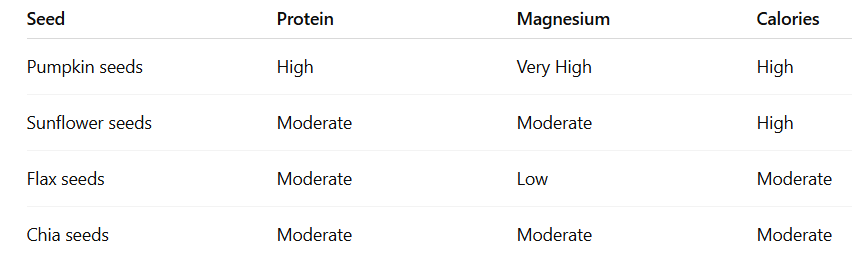
Pumpkin Seeds vs Other Seeds

pumpkin seeds nutrition facts 100g

Traditional & Modern Nutrition Perspective

From a traditional standpoint:

  • Seeds have long been used for strength and vitality

From modern nutrition science:

  • Magnesium and zinc deficiencies are common

  • Pumpkin seeds help bridge nutritional gaps naturally

Their use is supported by both experience and research, strengthening their credibility.

Common Myths About Pumpkin Seeds

Myth: Seeds cause weight gain
Truth: Only excess calories cause weight gain

Myth: They are high in fat, so unhealthy
Truth: The fats are mostly heart-friendly

Myth: Seeds are hard to digest
Truth: Soaking improves digestibility

Final Thoughts on Pumpkin Seeds Nutrition Facts 100g

Pumpkin seeds are a powerful addition to a balanced diet when used mindfully. They offer protein, minerals, and healthy fats in a natural form that supports overall health, fitness, and immunity.

The key is not how much you eat—but how consistently and wisely you include them.

Key Takeaway

Understanding pumpkin seeds nutrition facts 100g helps you appreciate their value, but daily portions should always be moderate. Small amounts deliver big benefits when combined with a healthy lifestyle.

Leave a Reply

Your email address will not be published. Required fields are marked *